
The desire for a bright, white smile is widespread, and with the popularity of cosmetic treatments, it’s understandable that parents often wonder: Is teeth whitening safe for kids? While a sparkling smile is appealing, the safety and necessity of professional or at-home teeth whitening procedures are viewed differently in pediatric dentistry compared to adult cosmetic care.
At Kind Kids Pediatric Dentistry, we prioritize the health, development, and long-term well-being of your child’s smile. As your trusted pediatric dentist in Des Plaines, we believe in providing families with clear, scientifically backed information regarding all dental procedures, especially those related to aesthetics.
Before considering any whitening treatment, it is important to understand why a child's teeth might appear darker or yellower than expected. Often, this is not due to staining but rather to natural physiological changes.
The most common reason for perceived "yellowness" occurs during the mixed dentition stage (typically ages 6 to 12), when children have a combination of baby teeth and new permanent teeth.
The thickness of the enamel also plays a role. In some children, the enamel may be thinner, allowing the underlying yellow dentin to show through more prominently. This is a structural issue, not one caused by surface stains.
True staining in children usually comes from dietary sources like dark juices, certain fruits, or less-than-ideal hygiene. These are surface stains that are often effectively managed with professional cleanings, not bleaching.
The American Academy of Pediatric Dentistry (AAPD) advises caution regarding bleaching products for children, primarily due to the immaturity of their teeth and potential for misuse.
The most significant concern with teeth whitening in children involves the tooth pulp (the nerve center).
Over-the-counter kits often use trays that are poorly fitted. This allows the bleaching gel to leak onto the delicate gum tissue, causing chemical burns, irritation, and inflammation. This is a significant risk when attempting unsupervised whitening at home.
Experts recommend waiting until a child’s permanent teeth are fully developed, usually in the mid to late teenage years, before considering chemical whitening. Full development ensures the pulp chambers have receded and the enamel has fully matured, reducing the risk of sensitivity.
At Kind Kids Pediatric Dentistry, we focus on safe, non-chemical methods to achieve and maintain a bright smile.
The most effective way to brighten a child's smile is regular, diligent hygiene:
Reducing exposure to certain foods and drinks can prevent new staining:
If a child has pronounced, localized surface stains that do not respond to cleaning (often caused by early exposure to medication or trauma), your pediatric dentist in Des Plaines may recommend microabrasion.
For older teenagers whose permanent teeth are fully established and who have significant cosmetic concerns that affect their self-esteem, professional, supervised whitening may be an option.
Q1: Are whitening strips safe for children?
A: Generally, no. Whitening strips contain bleaching chemicals and are often poorly sized for children’s smaller mouths, increasing the risk of chemical leakage onto the gums. Furthermore, the concentration of peroxide may be too high for a young, developing tooth. We strongly advise against unsupervised use of any over-the-counter products.
Q2: Why is my child’s new adult tooth yellower than the baby teeth next to it?
A: This is completely normal and due to the natural composition of the teeth. Adult teeth have a denser, more yellow layer of dentin under the enamel, whereas baby teeth are whiter and more opaque. As more adult teeth erupt, the contrast will disappear.
Q3: What should I do if my child asks for whiter teeth?
A: Schedule an appointment with your pediatric dentist in Des Plaines at Kind Kids Pediatric Dentistry. We will assess the cause of the perceived yellowness, rule out underlying problems, and discuss safe, non-chemical ways to maximize the natural brightness of their smile through hygiene and diet.
Q4: Does professional cleaning make teeth look whiter?
A: Yes, absolutely. Professional cleanings remove extrinsic surface stains caused by food, drink, and plaque build-up. Often, this is all that is needed to dramatically brighten a child's smile and reveal their natural, healthy color.
Q5: Can I whiten my child’s teeth if they have braces?
A: No. Whitening should never be performed with fixed orthodontic appliances (braces) because the areas covered by the brackets will not lighten, leading to uneven results. Any necessary whitening should be delayed until the braces are removed.
The team at Kind Kids Pediatric Dentistry is dedicated to guiding your child through every stage of dental development with safety as our top priority. When it comes to aesthetics, we favor protective, non-chemical methods that secure the health of developing teeth first.
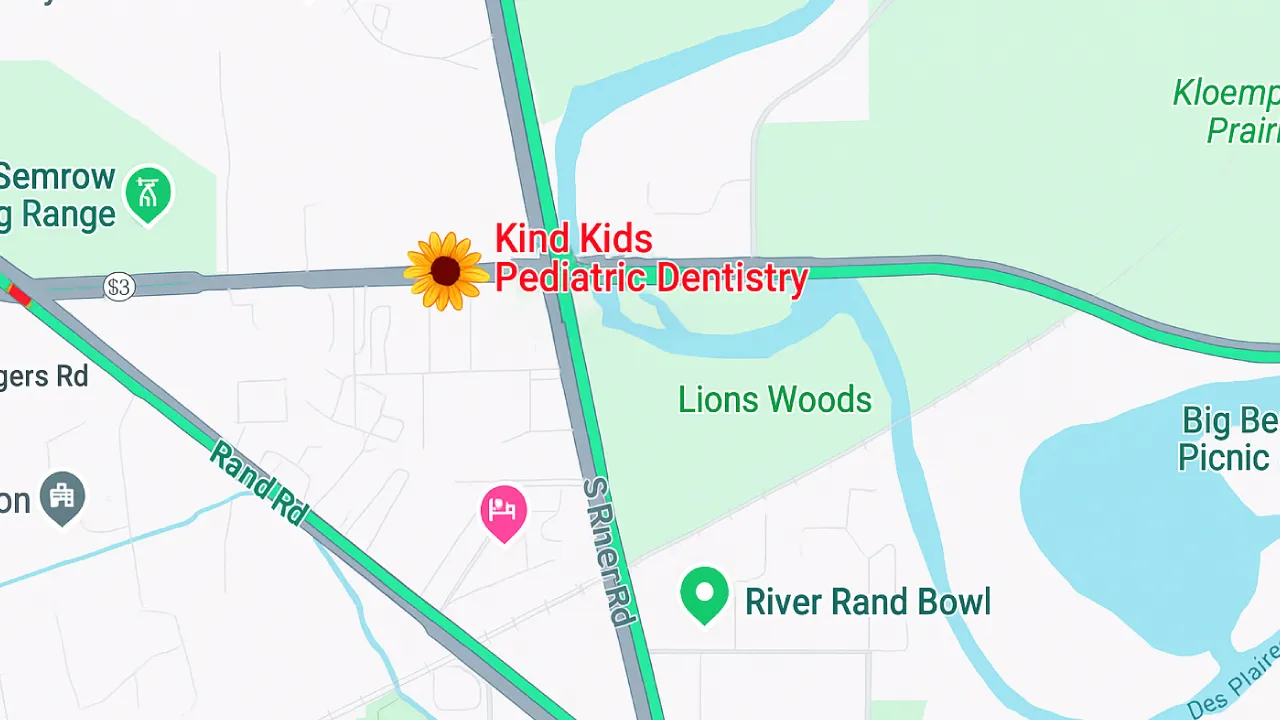
Contact Kind Kids Pediatric Dentistry today to schedule a comprehensive checkup. Let our pediatric dentist in Des Plaines assess your child's smile development and recommend the safest path to a healthy, naturally bright smile.
Get top-quality dental care in Des Plaines, IL—book an appointment
with our experienced dentists at Kind Kids Pediatric Dentistry.


 (224) 580-2007