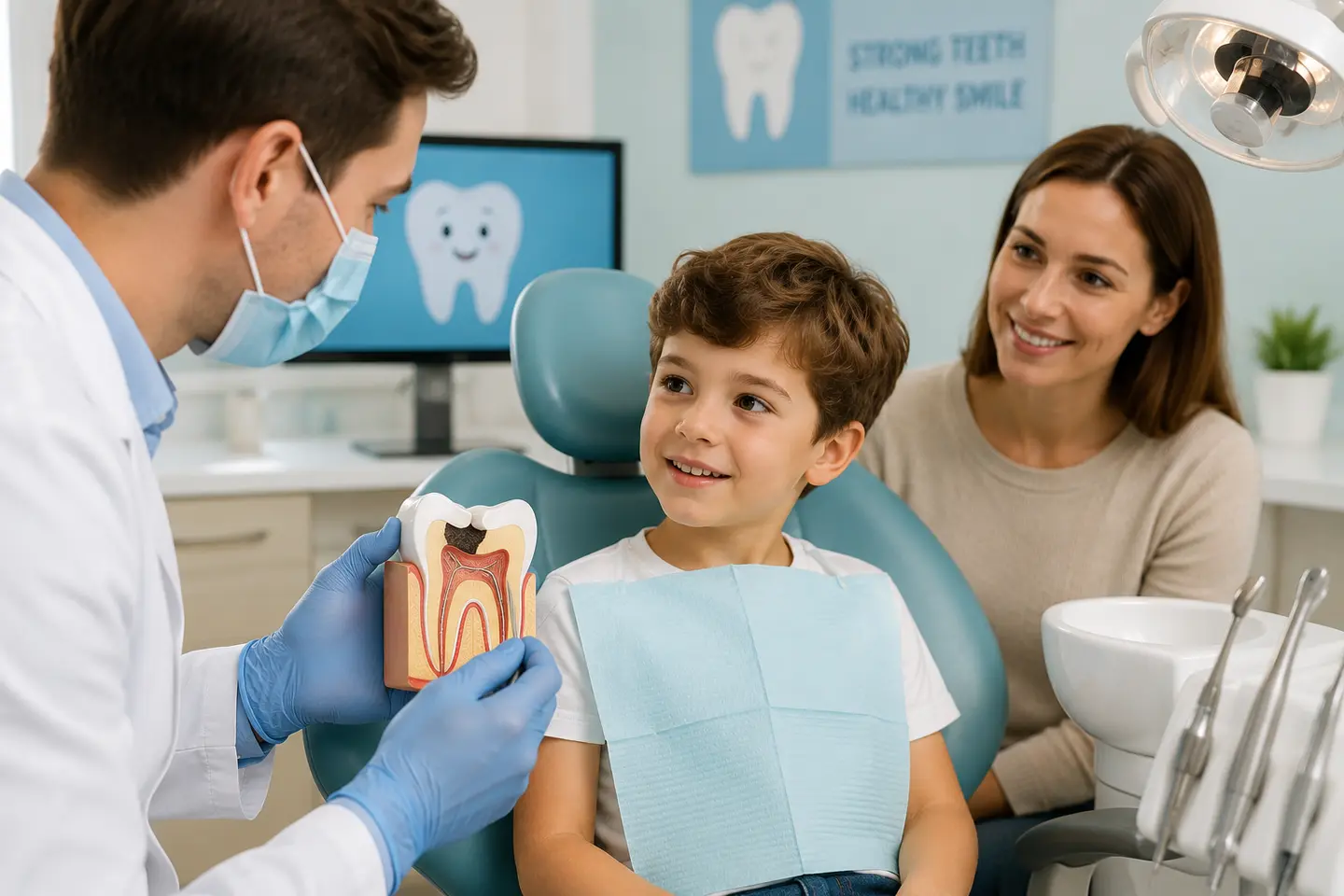
Finding out your child has a cavity can feel a little alarming, especially if you've been diligent about brushing and bedtime routines. But here's something worth knowing right away: cavities in kids are incredibly common, and they're very treatable. At Kind Kids Pediatric Dentistry, we help families navigate this all the time, and the experience is almost always much smoother than parents expect going in.
This guide covers everything you need to know, from how cavities actually form in children to what treatment looks like and how to prevent the next one from showing up.
It's a question a lot of parents ask, and the honest answer is that several things work against kids when it comes to tooth decay.
Baby teeth have thinner enamel than adult teeth, which means decay can move through them faster once it starts. Kids also tend to eat more frequently throughout the day, and many of their favorite foods and drinks- think juice, crackers, fruit snacks, and milk before bed- create an environment where cavity-causing bacteria thrive. Add in the fact that most children aren't brushing or flossing with perfect technique yet, and it becomes a lot clearer why cavities are so common even in kids whose parents are doing their best.
None of that means you've done something wrong. It just means cavities are something a lot of families deal with, and catching them early makes a significant difference in how straightforward treatment is.
One of the trickiest things about cavities in young children is that they often don't cause obvious pain until they've progressed. By the time a child is complaining about tooth pain, the decay has usually been there for a while.
That's one of the biggest reasons regular dental visits matter so much. A dentist can spot early decay long before it becomes painful or visible to you at home. That said, there are some signs worth paying attention to between appointments.
If your child mentions that a tooth hurts when they eat something sweet, hot, or cold, that sensitivity can be a signal. Visible white spots on the surface of a tooth are often an early sign of enamel breakdown. Dark spots or visible holes are signs that decay has already taken hold. Any time your child points to a tooth that's bothering them, it's worth getting it looked at sooner rather than later.
This is probably the question we hear most often, and it's a completely fair one. If a tooth is going to fall out anyway, why go through treatment?
The short answer is that baby teeth do a lot more than most people realize. They hold the space that permanent teeth need to come in correctly. They help children chew food properly, which matters for nutrition and development. They also play a role in speech and in your child's confidence when they smile.
When a baby tooth is lost too early because of untreated decay, the surrounding teeth can drift into that space. That can create alignment problems for the permanent teeth coming in later, sometimes requiring more extensive orthodontic treatment down the road.
Beyond that, an untreated cavity doesn't just stay a cavity. It can develop into an infection that causes real pain and can affect the developing adult tooth underneath. Treating it early is always the better path, both for your child's comfort now and for their long-term dental health.
A lot of parent anxiety around kids' dental treatment comes from imagining an adult experience scaled down to a child. In reality, pediatric dental care looks and feels quite different, and the team at Kind Kids Pediatric Dentistry is specifically trained to make the whole process feel manageable for little ones.
For small cavities caught early, treatment is often straightforward. The decayed portion of the tooth is gently removed, and the area is filled with a tooth-colored composite material. For very young children or those with dental anxiety, a numbing gel is applied first so the area can be made comfortable before any work begins.
For cavities that have reached deeper into the tooth, a larger filling or a pediatric dental crown may be recommended. Crowns are often used on baby teeth because they cover and protect the entire tooth, which holds up much better over time than a filling alone when decay has been more extensive.
In cases where decay has reached the inner part of the tooth and is causing infection or significant pain, a pulpotomy may be needed. This is sometimes called a baby root canal, though it's a much simpler procedure than what that name implies. It involves removing the affected inner tissue to relieve the infection and save the tooth, and it's routinely done in a pediatric dental office with appropriate comfort measures in place.
Throughout any of these procedures, keeping your child calm and comfortable is always the priority. The team at Kind Kids Pediatric Dentistry uses a lot of gentle explanation, distraction techniques, and a patient pace to make sure kids feel at ease rather than scared.
For children who are very young, have significant dental anxiety, or need more extensive treatment, sedation dentistry is sometimes recommended. This often surprises parents who weren't expecting it to come up, but it's a very common and well-established part of pediatric dental care.
Nitrous oxide, often called laughing gas, is the most commonly used option. It's mild, it wears off quickly, and it helps children relax without putting them to sleep. Many kids barely remember the appointment afterward, which is actually a good thing.
For more complex situations, deeper sedation options may be discussed. If sedation is recommended for your child, your dentist will walk you through exactly what's involved, what to expect, and how to prepare. It's always a conversation, never a surprise.
Getting a cavity treated is one thing. Making sure it doesn't happen again is where the real work happens at home. After treatment, the same habits that prevent cavities in the first place become even more important.
Brushing twice a day with a fluoride toothpaste, flossing once a day as soon as teeth are touching, and limiting sugary or starchy snacks between meals all play a meaningful role. Drinking water, particularly fluoridated tap water, helps rinse away food particles and supports enamel strength throughout the day.
At dental visits, fluoride treatments and dental sealants are two preventive tools that can add a significant layer of protection. Sealants are thin coatings applied to the chewing surfaces of the back teeth, where most cavities in children form, and they work by physically blocking food and bacteria from settling into the grooves of the tooth. They're quick, painless, and effective.
Cavities are one of those things that can feel overwhelming when you first hear about them, but they really don't have to be. With the right care, even a child who has had multiple cavities can go on to have a healthy, happy smile for life. The key is getting the right support and staying consistent with care at home and in the dental chair.
At Kind Kids Pediatric Dentistry, our goal is to make every visit feel safe, positive, and genuinely comfortable for your child. Whether you're coming in for a routine checkup or you suspect a cavity needs attention, we're here for it.
Reach out today to schedule an appointment and let our team take great care of your little one's smile.
Q: My child had a cavity filled but is still complaining about the tooth. Is that normal?
A: Some sensitivity after a filling is fairly common and usually settles down within a few days. If the discomfort is significant, lasts longer than a week, or your child is having trouble eating, it's worth calling the office to have it checked. Sometimes an adjustment to the filling or a closer look is all that's needed.
Q: Can a cavity go away on its own if we start brushing better?
A: Very early enamel damage, sometimes called a white spot lesion, can sometimes be reversed or halted with improved brushing, fluoride, and dietary changes. However, once a cavity has actually formed and broken through the enamel, it won't heal on its own. At that point, treatment is needed to stop it from progressing further.
Q: Will my child feel pain during cavity treatment?
A: The team at Kind Kids Pediatric Dentistry takes comfort very seriously. Numbing is used before any procedure that requires it, and the process is explained to children in age-appropriate language so they know what to expect. Most kids are surprised by how manageable it is.
Q: How long does a filling last in a baby tooth?
A: A filling in a baby tooth is designed to hold up until that tooth naturally falls out on its own. With good home care and regular dental visits, most fillings do exactly that. Your dentist can give you a more specific picture based on the tooth involved and your child's age.
Q: Should I be worried if my child has multiple cavities at once?
A: Multiple cavities at the same time is more common than you might think, especially in younger children. It doesn't mean you've been neglecting your child's teeth. It often reflects a combination of factors including diet, tooth anatomy, and the speed of decay in young enamel. Your dentist will put together a treatment plan that addresses everything in a logical, manageable order.
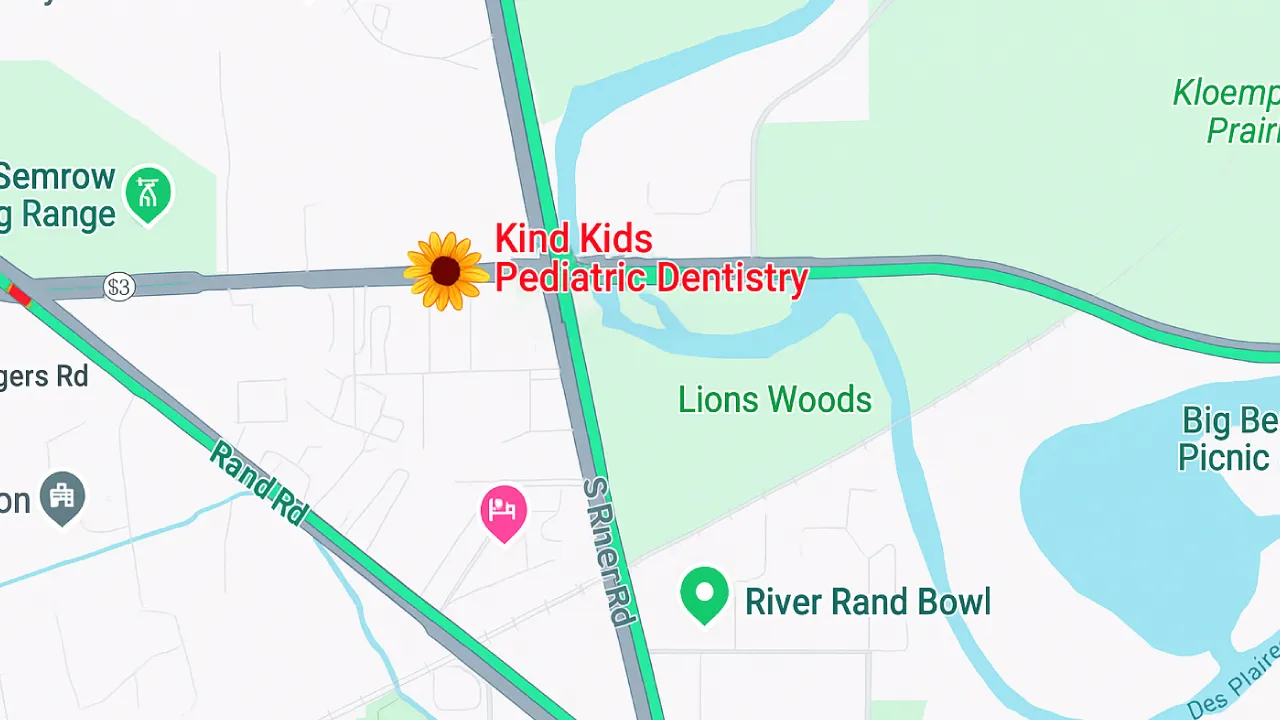
Get top-quality dental care in Des Plaines, IL—book an appointment
with our experienced dentists at Kind Kids Pediatric Dentistry.


 (224) 580-2007